Minimum Wage Implementation in Bangladesh’s RMG Sector: Progress, Challenges, and Workers’ Realities
A new research brief by Awaj Foundation under the project of Mondiaal FNV examines the implementation of Bangladesh’s revised minimum wage in the Ready-Made Garment (RMG) sector following the 2023 wage board decision. Based on surveys, focus group discussions, and interviews across 60 factories, the study highlights both improvements and ongoing challenges for garment workers.
The findings show that while 86.7% of workers reported receiving the revised wage, many still experienced delayed implementation, incomplete overtime adjustments, and confusion regarding grade changes. Factories with active trade unions demonstrated better compliance, more timely wage payments, and stronger worker protections than non-unionised workplaces.
Although workers generally experienced increased incomes, the wage rise was often accompanied by higher production targets, increased workplace pressure, deteriorating relationships with supervisors, and growing psychological harassment. Around one-third of workers also reported layoffs following wage implementation.
The study further reveals that improved wages have not necessarily translated into improved living standards. Rising costs of rent, transportation, education, and healthcare continue to erode workers’ purchasing power, while many workers remain dependent on loans and credit purchases to meet basic needs.
To address these challenges, the research recommends stronger government monitoring, transparent wage payment systems, realistic production targets, enhanced trade union participation, greater brand accountability, and implementation of key labour reform recommendations to ensure that wage increases genuinely improve workers’ livelihoods.
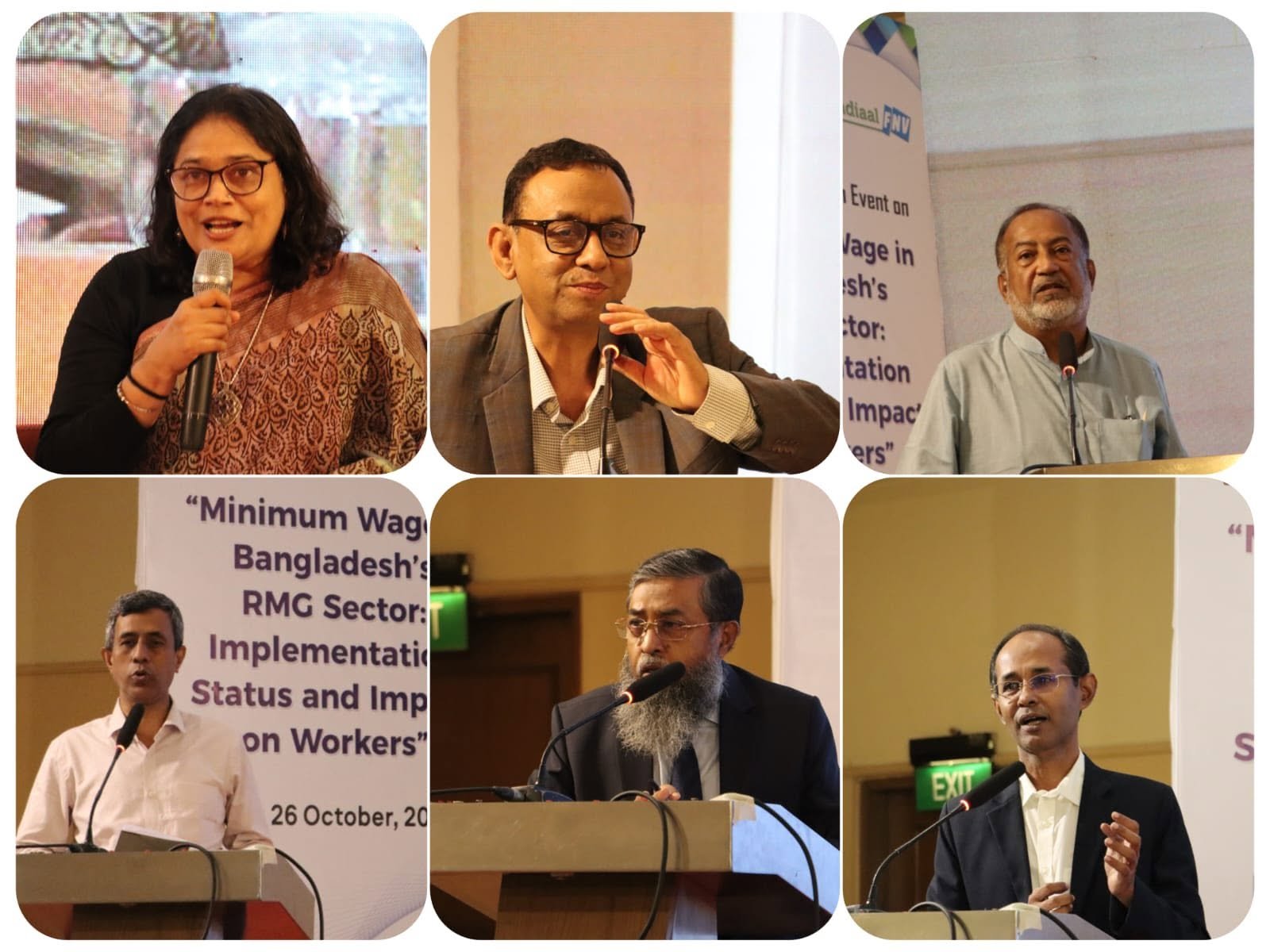
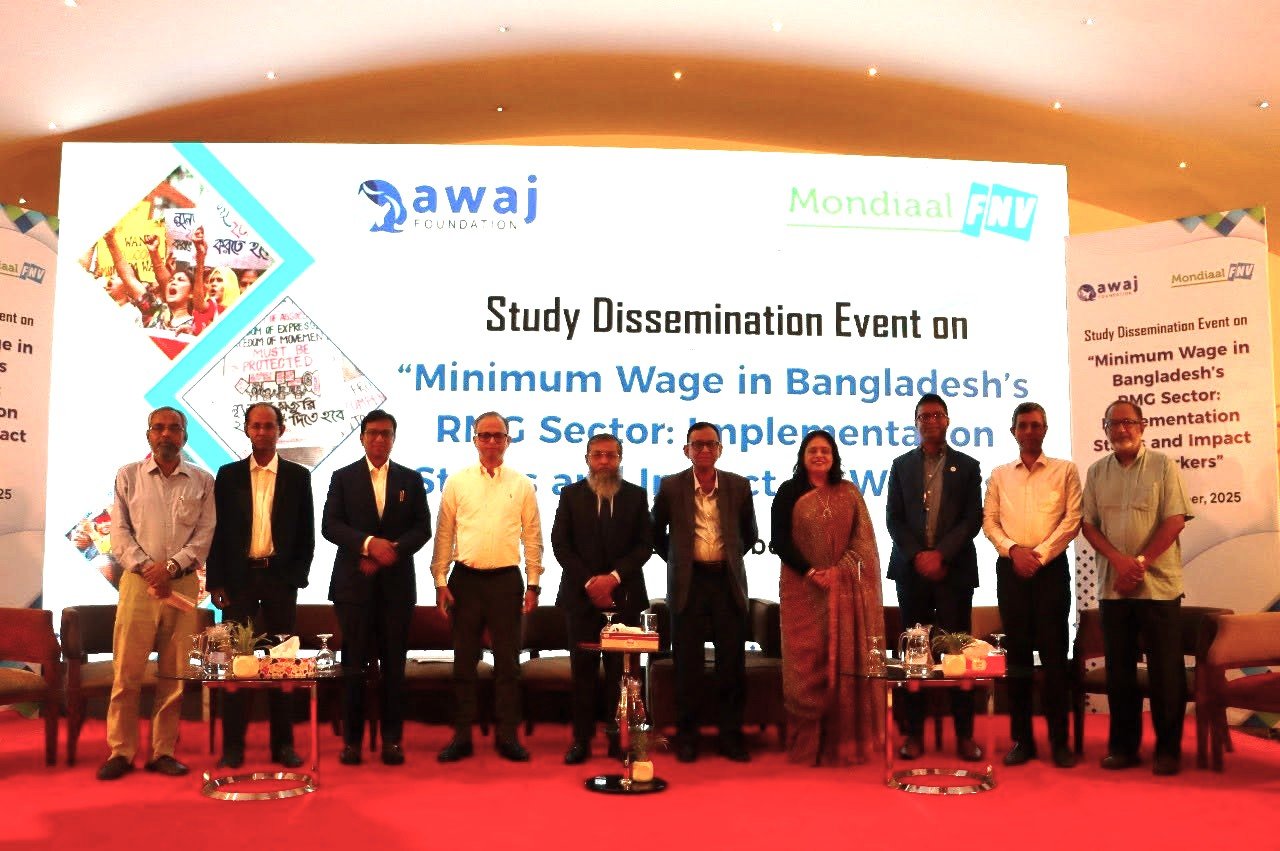
Based on the study findings, Awaj Foundation organised a Study Dissemination Program in October, 2025. The event brought together representatives from BGMEA, BKMEA, the Ministry of Labour and Employment (MoLE), the Department of Labour (DoL), the Department of Inspection for Factories and Establishments (DIFE), the Industrial Bangladesh Council (IBC), the International Labour Organisation (ILO), and various national trade union federations. Participants shared valuable insights and recommendations aimed at strengthening wage implementation, improving compliance, and ensuring greater accountability across the sector.
The discussion provided an important platform for stakeholders to reflect on the study’s findings, exchange perspectives, and identify practical steps to address the challenges faced by workers. Participants emphasised that effective enforcement, stronger social dialogue, and collaborative efforts among employers, government institutions, brands, and trade unions are essential to ensure that minimum wage implementation contributes to a decent standard of living, dignity, and social justice for all garment workers.